Message

Johanna
Thursday, 29 December 2011 11:59
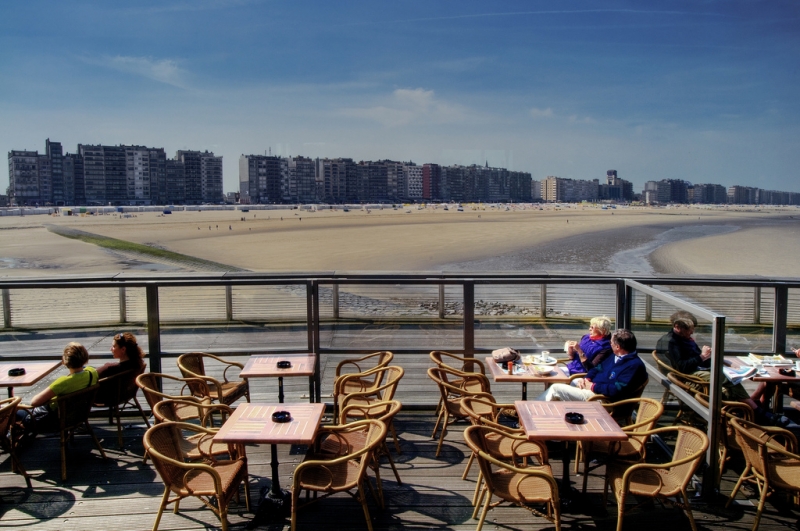
Belgian continental shelf
Belgian continental shelf
Main Contributors:
Johanna Yletyinen
Other Contributors:
Summary
Hypoxia type unknown but recorded in the 2000s.
Type of regime shift
Ecosystem type
- Marine & coastal
Land uses
- Fisheries
Spatial scale of the case study
- Local/landscape (e.g. lake, catchment, community)
Continent or Ocean
- Europe
Region
- West Europe
Countries
- Belgium
Locate with Google Map
Key References
-
OSPAR commission. 2003. OSPAR Integrated Report 2003 on the Eutrophication Status of the OSPAR Maritime Area Based Upon the First Application of the Comprehensive Procedure. Eutrophication Series. Available online: http://www.eutro.org/documents/p00189_Eutrophication Status Report 2003.pdf (Last accessed 29.12.2011)
Citation
Johanna Yletyinen.
Belgian continental shelf.
In: Regime Shifts Database, www.regimeshifts.org.
Last revised 2012-03-17 18:55:01 GMT.
Published in
Case Studies
Tagged under
Thursday, 29 December 2011 10:43
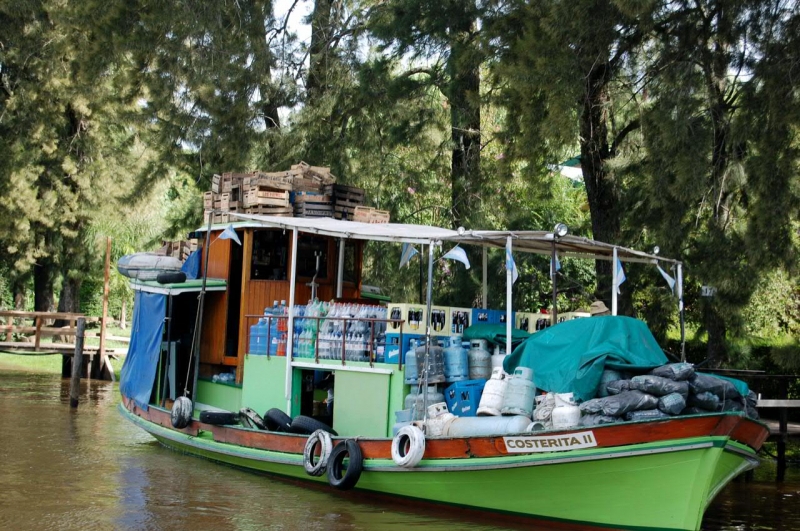
La Plata River Estuary, Argentina
La Plata River Estuary, Argentina
Main Contributors:
Johanna Yletyinen
Other Contributors:
Summary
Hypoxia in the La Plata river estuary caused a change in the trophic structure of fish.
Type of regime shift
Ecosystem type
- Marine & coastal
- Freshwater lakes & rivers
Land uses
- Fisheries
Spatial scale of the case study
- Local/landscape (e.g. lake, catchment, community)
Continent or Ocean
- South America
Region
- East coast of South America
Countries
- Argentina
Locate with Google Map
Key References
-
Nagy GJ, Gómez-Erache M, López CH, Perdomo AC. 2002. Distribution patterns of nutrients and symptoms of eutrophication in the Rio de la Plata River Estuary System. Hydrobiologia 475-476, 125-139.
Citation
Johanna Yletyinen.
La Plata River Estuary, Argentina.
In: Regime Shifts Database, www.regimeshifts.org.
Last revised 2012-03-17 18:55:03 GMT.
Published in
Case Studies
Tagged under
Thursday, 29 December 2011 10:30
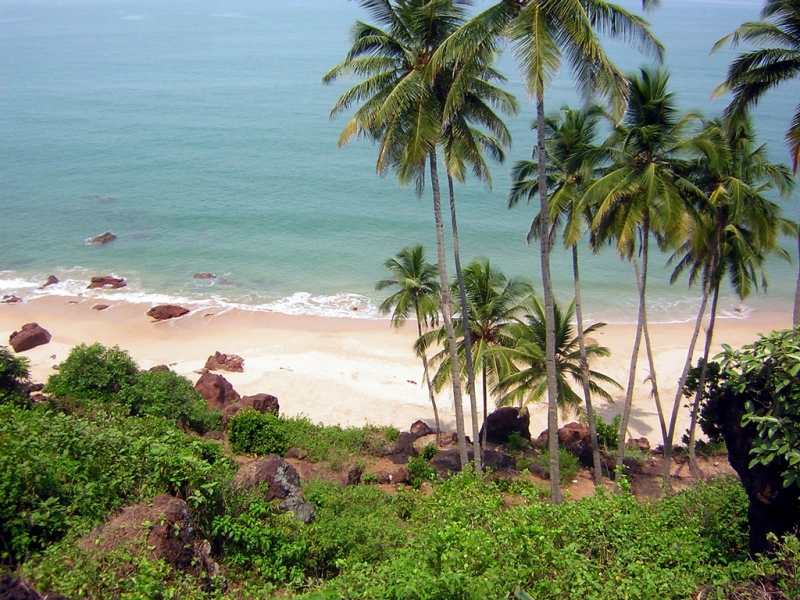
Western Indian Continental Shelf, India (Eastern Arabian Sea)
Western Indian Continental Shelf, India (Eastern Arabian Sea)
Main Contributors:
Johanna Yletyinen
Other Contributors:
Summary
Potential eutrophication has led to lower dissolved oxygen content.
Type of regime shift
Ecosystem type
- Marine & coastal
Land uses
- Fisheries
Spatial scale of the case study
- Sub-continental/regional (e.g. southern Africa, Amazon basin)
Continent or Ocean
- Asia
Region
- Arabian Sea
Countries
- Pakistan
- India
Locate with Google Map
Key References
-
Naqvi et al. 2009. Seasonal anoxia over the Western Indian continental shelf. Geophysical Monograph Series 185, 333-345.
Citation
Johanna Yletyinen.
Western Indian Continental Shelf, India (Eastern Arabian Sea).
In: Regime Shifts Database, www.regimeshifts.org.
Last revised 2012-03-17 18:59:56 GMT.
Published in
Case Studies
Tagged under
Thursday, 29 December 2011 10:15
Dubai Creek, United Arab Emirates
Dubai Creek, United Arab Emirates
Main Contributors:
Johanna Yletyinen
Other Contributors:

Summary
Dubai Creek has received high levels of organic loading from sewage. Hypoxia has decreased benthic abundance and diversity.
Type of regime shift
Ecosystem type
- Marine & coastal
Land uses
- Fisheries
Spatial scale of the case study
- Local/landscape (e.g. lake, catchment, community)
Continent or Ocean
- Asia
Region
- Arabian Peninsula
Countries
- United Arab Emirates
Locate with Google Map
Key References
-
Saunders J, Zahedb KMA, Paterson DM. 2007. The impact of organic pollution on the macrobenthic fauna of Dubai Creek (UAE). Marine Pollution Bulletin 54, 1715-1723.
Citation
Johanna Yletyinen.
Dubai Creek, United Arab Emirates.
In: Regime Shifts Database, www.regimeshifts.org.
Last revised 2012-03-17 19:00:01 GMT.
Published in
Case Studies
Tagged under
Thursday, 29 December 2011 10:06
Tanshui Estuary, Taiwan
Tanshui Estuary, Taiwan
Main Contributors:
Johanna Yletyinen
Other Contributors:

Summary
Six million people live in the catchment area of the Tanshui River system. The Tanshui Estuary is heavily polluted since it receives untreated domestic discharge and both treated and untreated industrial effluent from its tributaries. Untreated domestic sewage and industrial waste contribute to hypoxia in the upper estuary.
Type of regime shift
Ecosystem type
- Marine & coastal
- Freshwater lakes & rivers
Land uses
- Fisheries
Spatial scale of the case study
- Local/landscape (e.g. lake, catchment, community)
Continent or Ocean
- Asia
Region
- East Asia
Countries
- China, Republic of (Taiwan)
Locate with Google Map
Key References
-
Fang T-H, Lin C-L. 2002. Dissolved and particulate trace metals and their partitioning hypoxic estuary: The Tanshui Estuary in northern Taiwan. Estuaries 25, 598-607.
Citation
Johanna Yletyinen.
Tanshui Estuary, Taiwan.
In: Regime Shifts Database, www.regimeshifts.org.
Last revised 2012-03-17 19:00:03 GMT.
Published in
Case Studies
Tagged under
Thursday, 29 December 2011 09:54
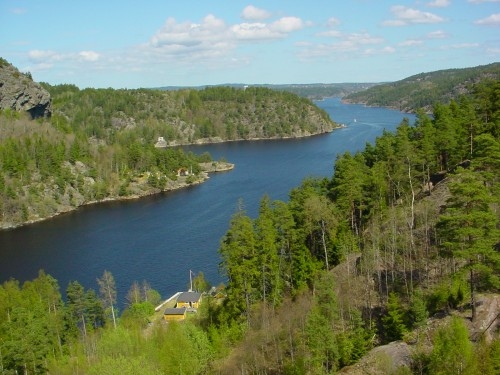
Idefjord, Sweden and Norway
Idefjord, Sweden and Norway
Main Contributors:
Johanna Yletyinen
Other Contributors:
Summary
Persistent hypoxia in Idefjord caused bethic mortality and reduced benthos. The hypoxia was first recorded in the 1960s. After closing of the local sulfite pulp mill, the fjord has recovered.
Type of regime shift
Ecosystem type
- Marine & coastal
Land uses
- Fisheries
Spatial scale of the case study
- Local/landscape (e.g. lake, catchment, community)
Continent or Ocean
- Europe
Region
- North Europe
Countries
- Norway
- Sweden
Locate with Google Map
Key References
-
Hanslik D, Rosenberg K. 2006. The foraminiferal record of pollution and recovery of the formerly heavily polluted Idefjord, Sweden/Norway. Abstract, Svenska Havsforskarföreningen, Havsforskarmöte in Göteborg, 2-4 October 2001. Geophysical Research Abstracts 8.
Citation
Johanna Yletyinen.
Idefjord, Sweden and Norway.
In: Regime Shifts Database, www.regimeshifts.org.
Last revised 2012-03-17 19:00:07 GMT.
Published in
Case Studies
Tagged under
Thursday, 29 December 2011 09:38
Northern Baltic Sea
Northern Baltic Sea
Main Contributors:
Johanna Yletyinen
Other Contributors:

Summary
The Baltic Sea hypoxia is caused by eutrophication and limited salt water input from the North Sea. In the northern Baltic Sea hypoxia is rare in the estuaries of the Bothnian Sea coastal zone. In the Swedish and Finnish archipelagos hypoxia is influenced by phytoplankton growth due to eutrophication and restricted water circulation.
Type of regime shift
Ecosystem type
- Marine & coastal
Land uses
- Fisheries
Spatial scale of the case study
- Sub-continental/regional (e.g. southern Africa, Amazon basin)
Continent or Ocean
- Europe
Region
- North Europe
Countries
- Sweden
- Finland
Locate with Google Map
Key References
-
Conley D et al. 2011. Hypoxia Is Increasing in the Coastal Zone of the Baltic Sea. Environ. Sci. Technol. 2011, 6777–6783.
Citation
Johanna Yletyinen.
Northern Baltic Sea.
In: Regime Shifts Database, www.regimeshifts.org.
Last revised 2012-03-17 18:59:41 GMT.
Published in
Case Studies
Tagged under
Thursday, 29 December 2011 09:13
Stockholm Inner Archipelago, Sweden
Stockholm Inner Archipelago, Sweden
Main Contributors:
Johanna Yletyinen
Other Contributors:

Summary
In the early 1970s the inner Stockholm archipelago was highly eutrophic. After decreases in nutrient inputs the environmental status has improved. Hypoxia has decreased in some - but not all - parts of the archipelago.
Type of regime shift
Ecosystem type
- Marine & coastal
Land uses
- Fisheries
Spatial scale of the case study
- Local/landscape (e.g. lake, catchment, community)
Continent or Ocean
- Europe
Region
- North Europe
Countries
- Sweden
Locate with Google Map
Key References
-
Karlsson M, Jonsson P. 2010. Indications of Recovery from Hypoxia in the Inner Stockholm Archipelago. Ambio 38, 486-495.
Citation
Johanna Yletyinen.
Stockholm Inner Archipelago, Sweden.
In: Regime Shifts Database, www.regimeshifts.org.
Last revised 2012-03-17 19:00:15 GMT.
Published in
Case Studies
Tagged under
Thursday, 29 December 2011 09:03
Sea of Azov
Sea of Azov
Main Contributors:
Johanna Yletyinen
Other Contributors:

Summary
Hypoxia in the Sea of Azov has caused benthic mortality. Significant anoxia occurred in 1937, 1946, 1987 and 2001.
Type of regime shift
Ecosystem type
- Marine & coastal
- Freshwater lakes & rivers
Land uses
- Fisheries
Spatial scale of the case study
- Sub-continental/regional (e.g. southern Africa, Amazon basin)
Continent or Ocean
- Asia
Region
- Europe - Asia
Countries
- Russia
- Ukraine
Locate with Google Map
Key References
-
Debolskaya EI, Yakushev EV, Sukhinov AI. 2005. Formation of fish kills and anaerobic conditions in the Sea of Azov. Water Resources 32, 151-162.
Citation
Johanna Yletyinen.
Sea of Azov.
In: Regime Shifts Database, www.regimeshifts.org.
Last revised 2012-03-17 18:59:44 GMT.
Published in
Case Studies
Tagged under
Thursday, 29 December 2011 08:54
Himmerfjärden, Sweden
Himmerfjärden, Sweden
Main Contributors:
Johanna Yletyinen
Other Contributors:

Summary
Himmerfjärden in southern Stockholm archipelago receives treated sewage. Himmerfjärden is stratified during summer, when hypoxia in bottom waters may develop. Sea ice may limit water exchange with the open Baltic Sea during winter.
Type of regime shift
Ecosystem type
- Marine & coastal
Land uses
- Fisheries
Spatial scale of the case study
- Local/landscape (e.g. lake, catchment, community)
Continent or Ocean
- Europe
Region
- North Europe
Countries
- Sweden
Locate with Google Map
Key References
-
Savage C, Elmgren R, Larsson U. 2002. Effects of sewage-derived nutrients on an estuarine macrobenthic community. Marine Ecology Progress Series 234, 67-82.
Citation
Johanna Yletyinen.
Himmerfjärden, Sweden.
In: Regime Shifts Database, www.regimeshifts.org.
Last revised 2012-03-17 19:00:20 GMT.
Published in
Case Studies
Tagged under
