Message

Johanna
Chesapeake Bay, USA
Chesapeake Bay, USA
Main Contributors:
Other Contributors:

Summary
The Chesapeake Bay is an estuary into which more than 150 rivers and streams drain. Hypoxia was observed already in the 1930s. By the 1970s there was consistent anoxia in the summer months. In the 1980s the hypoxic and anoxic conditions covered most of the bay bottom with year-to-year variation. To some extent, hypoxia in the Chesapeake Bay is natural since the bay has a large catchment area, seasonally stratified water mass and isolated basins. Opinions differ on the degree to which hypoxia has worsened due to eutrophication, but it is clear that hypoxia intensified greatly between the mid-1950s and mid-1980s, which is the period when human population in the Chesapeake Bay watershed nearly doubled and the use of inorganic fertilizers nearly tripled.
Chesapeake Bay is particularly susceptible to dysfunction from eutrophication. Compared with other marine ecosystems, the bay has higher primary production than would be predicted from known nutrient inputs. The size of the bay, material residence times, and tidal and non-tidal circulation lead to a greater recycling and reuse of nutrients. Large quantities of sessile benthic biota die during summer hypoxia and anoxia. Although some species migrate, fall recolonization may fail and cause changes in communal dominance. Migration of fish may also cause fish declines as available food supply and space decline. Species changes in phytoplankton communities have been observed and timing, quality and size of the blooms have changed.
Chesapeake Bay is particularly important as a spawning and nursery ground for many species. Many species that play fundamental ecosystem roles in Chesapeake Bay are in decline, as are several species of key economic importance to the region. Chesapeake Bay is used for commercial shipping, generation of electricity, waste disposal, commercial harvesting of wildlife, recreation and research. In 1987 a commitment was made to reduce controllable sources of nitrogen and phosphorus to combat eutrophication. Nutrient inputs have decreased.
Type of regime shift
Ecosystem type
- Marine & coastal
Land uses
- Fisheries
Spatial scale of the case study
- Sub-continental/regional (e.g. southern Africa, Amazon basin)
Continent or Ocean
- North America
Region
- North America
Countries
- United States
Locate with Google Map
Key References
-
Officer C, Biggs R, Taft J, Cronin E, Tyler M, Boynton W. 1984. Chesapeake Bay anoxia. Origin, development and significance. Science 223, 22-27.
-
Zimmerman A, Canual E. 2000. A geochemical record of eutrophication and anoxia in Chesapeake Bay sediments: anthropogenic influence on organic matter composition. Marine Chemistry 69, 117-137.
Citation
East China Sea
East China Sea
Main Contributors:
Other Contributors:
Summary
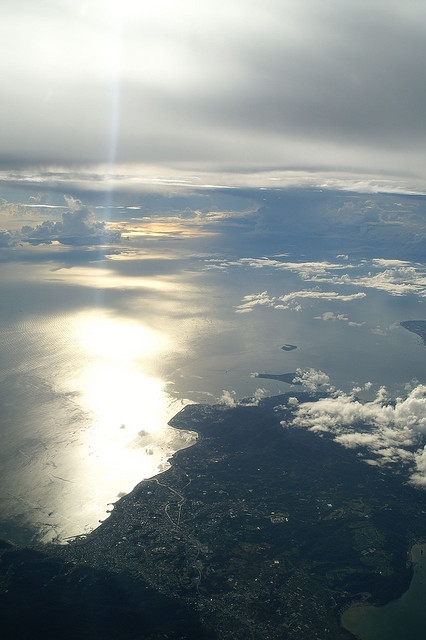
The East China Sea has faced a huge stress from population growth in the Changjiang river (Yangtze River) drainage basin and the areas along the coasts. Hypoxia was first documented in the early 1980s. In the past two decades, the anthropogenic nutrient load from the Changjiang River has increased over 10-fold and continuous growth is expected in the future. The formation and maintenance of the hypoxia is due to anthropogenic nutrient load through the river and strong stratification. The major source of nutrients is the use of fertilizers in agriculture. It has been suggested that there have been episodic hypoxia for the past 50 years but not every year, and that all events with large size of affected area occurred after the late 1990s.
The East China Sea hypoxia is episodic and sensitive to weather conditions. The Changjiang River is dominated by the East Asia Monsoon causing high flows with large sediment loads (decomposition consumes large quantities of dissolved oxygen) to the sea during summers. Reoccurring typhoons can mix the water and decrease the hypoxic volume. The cold air southward intrusion in the summer can change the wind direction and break the hypoxia. Bottom topography of the East China Sea and inflow of Taiwan Warm Current saline water may also be additional drivers for the hypoxic areas.
East China Sea is one of the world's major fishing grounds.
Type of regime shift
Ecosystem type
- Marine & coastal
Land uses
- Fisheries
Spatial scale of the case study
- Sub-continental/regional (e.g. southern Africa, Amazon basin)
Continent or Ocean
- Asia|-|Pacific Ocean
Region
- East Asia
Countries
- China, People's Republic of
- Japan
Locate with Google Map
Key References
-
Chung-Chi C, Gwo-Ching G, Fuh-Kwo S. 2007. Hypoxia in the East China Sea: One of the largest coastal low-oxygen areas in the world. Marine Environmental Research 64, 399-408.
-
Li D, Daler D. 2004. Ocean pollution from land-based sources: East China Sea, China. AMBIO: A Journal of the Human Environment 33, 107-113.
-
Wang B. 2009. Hydromorphological mechanisms leading to hypoxia off the Changjiang estuary. Marine Environmental Research 67, 53-58.
-
Wei H, He Y, Li Q, Liu Z, Wang H. 2007. Summer hypoxia adjacent to the Changjian estuary. Journal of Marine Systems 67, 292-303.
Citation
Guanabara Bay, Brazil
Guanabara Bay, Brazil
Main Contributors:
Other Contributors:
Summary
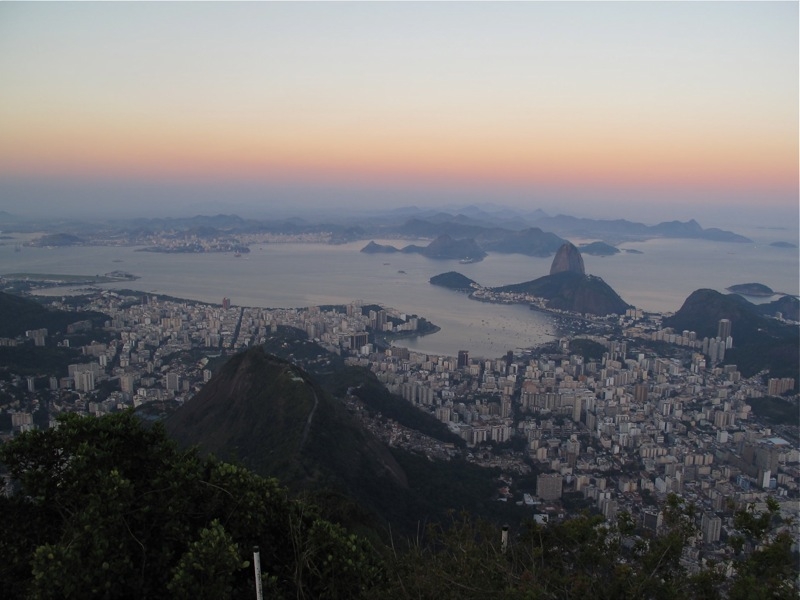
Guanabara Bay is a semi-enclosed eutrophic, tropical estuarine system surrounded by large urban areas (a.o. Rio de Janeiro) and over 12 million people living in its immediate surroundings. Water exchange is mainly tidally driven through a deep channel. Nutrient inputs to the bay are caused by mostly untreated domestic sewage and industries. Untreated or only a little treated waste together with limited vertical and horizontal mixing have caused extreme eutrophication in Guanabara Bay.
Seasonal hypoxic and anoxic conditions have led to total collapse of coastal bottom ecosystems in several inshore stretches of Guanabara Bay. Anoxic bottom waters in heavily polluted coastal systems also allow heavy metals to be incorporated into bottom sediments (sediment trapping). The large size of Guanabara Bay and the several processes acting at different scales in various parts of the bay cause a lot of spatial and temporal variation, but in general the lowest oxygen values have been found at the western part of the bay probably due to the large input of domestic sewage in this area.
Guanabara Bay has extensive mangrove ecosystems and considerable fisheries for crabs, fish and mollusks. The industrial, semi-industrial and artisanal fishery in and off Guanabara Bay has great local socio-economic importance. Pollution control plan was created already in 1979 but still in 1991 only 15% of the sewage was subjected to any treatment. Water quality situation in Guanabara Bay has become critical. Heavy metals in anoxic sediments may become a health risk if the water quality improves: oxidation of the sediments would release the heavy metals into the food web and thus contaminate sea food for humans.
Type of regime shift
Ecosystem type
- Marine & coastal
Land uses
- Fisheries
Spatial scale of the case study
- Local/landscape (e.g. lake, catchment, community)
Continent or Ocean
- South America
Region
- South America
Countries
- Brazil
Locate with Google Map
Key References
-
Kjerfve B, Ribeiro C, Dias G, Filippo A, Da Silva Quaresma V. 1997. Oceanographic characteristics of an impaired coastal bay: Baía de Guanabara, Rio de Janeiro, Brazil. Continental Shelf Research 17, 1690-1643.
-
Schwamborn R, Bonecker SLC, Galvão IB, Silva TA, Neumann-Leitão S. 2004. Mesozooplankton grazing under conditions of extreme eutrophication in Guanabara Bay, Brazil. Journal of Plankton Research 26, 983-992.
Citation
Tokyo Bay, Japan
Tokyo Bay, Japan
Main Contributors:
Other Contributors:
Summary
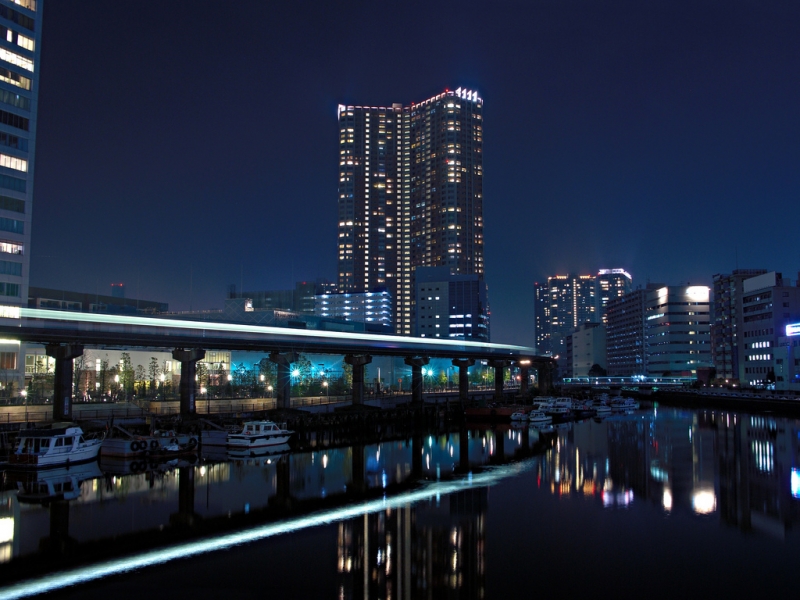
Tokyo Bay consists of two parts: the outer part faces the Pacific Ocean and the inner part is semi-enclosed with limited water exchange. Hypoxia develops in the central to northern part of the bay and persists from spring to autumn. During summer, up to two-thirds of the bottom becomes hypoxic. After the hypoxic episode, when death and migration of the benthic fauna have occurred, the area is recolonized by the bottom fauna either through migration or larval settlement. Some species which have spawning peak in spring and summer may fail in reproduce due to hypoxia. Hypoxia may alter the sustainability of the Tokyo Bay ecosystem through changes in the spatial and temporal community structure of macrobenthic and mecabenthic organisms.
Bottom hypoxia in Tokyo Bay is caused by anthropogenic eutrophication. It is unclear when hypoxia began, some reports state anoxia already in 1929. In the first bottom water surveys it was observed in 1955, after which it has been increasing both spatially and in duration. In July 2004 hypoxia occupied 67% of the whole bay area.
Reclamation of land along the coast of the bay has been done since the end of the World War II. It has led to deterioration of water and sediment quality. After the war, human population and industrial activities increased in the metropolitan area surrounding the bay. Household wastewater from the surrounding urban areas heavily contribute to nitrogen and phosphorus inputs.
Nutrient inputs to the bay have been decreasing due to regulations in The Guiding Principel on Countermeasures for Eutrophication in Tokyo Bay in 1982 and Water Pollution Control Law in 1993. Despite the increases in nutrient levels, the spatial extention and duration of the Tokyo Bay hypoxia has been increasing. The Tokyo Bay is still eutrophic, suggesting that the nutrient loading reduction alone is not sufficient to improve the eutrophic conditions of the bay. The ability of Tokyo Bay to recycle nutrients has most likely deteriorated due to the substantial loss of tidal flats because of coastal reclamation.
Type of regime shift
Ecosystem type
- Marine & coastal
Land uses
- Urban
- Fisheries
Spatial scale of the case study
- Local/landscape (e.g. lake, catchment, community)
Continent or Ocean
- Asia
Region
- East Asia
Countries
- Japan
Locate with Google Map
Key References
-
Kodama K, Horiguchi T. 2011. Effects of hypoxia on benthic organisms in Tokyo Bay, Japan: A review. Marine Pollution Bulletin 63, 215-220.
-
Kodama K, Lee J-H, Oyama M, Shiraishi H, Horiguchi T. 2011. Disturbance of benthic macrofauna in relation to hypoxia and organic enrichment in a eutrophic coastal bay. Marine Environmental Research (xxx*): 1-10 (*in press, available online 23 August 2011)
Citation
Bay of Somme (Baie de Somme), France
Bay of Somme (Baie de Somme), France
Main Contributors:
Other Contributors:

Summary
The Bay of Somme is a large estuary characterized by strong marine influence, low freshwater input and strong hydrodynamical processes. The first effects of eutrophication were observed in the beginning of the 1980s. The estuarine fauna is well adapted to permanent stress by tide and freshwater input. Episodic hypoxia has caused mass mortality of the benthos with multi-year recovery and collapse of cockle fishery.
In addition to the eutrophication, the drivers for the hypoxia in the Bay of Somme are exceptional weather conditions (high temperatures, eastern winds) and neap tides restricting mixing of water, bloom period with high oxygen consumption rates and degradation of phytoplankton, and the presence of shallow, oxygen-poor pools colonized by high densities of macrofauna.
Type of regime shift
Ecosystem type
- Marine & coastal
Land uses
- Fisheries
Spatial scale of the case study
- Local/landscape (e.g. lake, catchment, community)
Continent or Ocean
- Europe
Region
- Western Europe
Countries
- France
Locate with Google Map
Key References
-
Desprez M, Rybarxzyk H, Wilson JG, Ducrotoy, JP, Sueur F, Olivesi R, Elkaim B. 1992. Biological impact of eutrophication in the Bay of Somme and the induction and impact of anoxia. Netherlands Journal of Sea Research 30, 149-159.
Citation
Gulf of Riga
Gulf of Riga
Main Contributors:
Other Contributors:
Summary
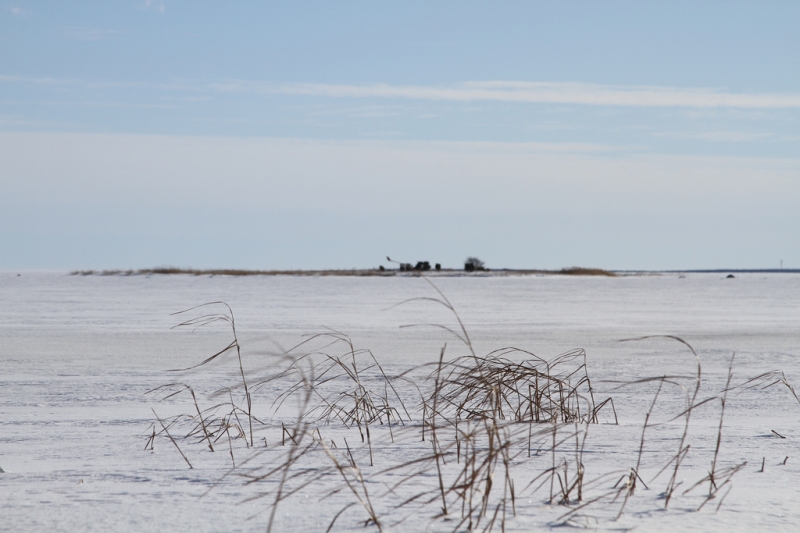
The Gulf of Riga is a brackish sub-basin of the Baltic Sea. Small water volume and restricted water exchange make the Gulf of Riga sensitive to pollution. Episodic hypoxia, which is linked to the Baltic Sea eutrophication, has caused habitat loss, mortality of benthic fauna and food web changes. It has been suggested that improved wastewater treatment might help the Gulf of Riga to recover from the eutrophication.
Type of regime shift
Ecosystem type
- Marine & coastal
Land uses
- Fisheries
Spatial scale of the case study
- Local/landscape (e.g. lake, catchment, community)
Continent or Ocean
- Europe
Region
- Baltic States
Countries
- Estonia
- Latvia
Locate with Google Map
Key References
-
Conley D, Björck S, Bonsdorff E, Carstensen J, Destouni G, Gustafsson B, Hietanen S, Kortekaas M, Kuosa H, Meier M, Müller-Karulis B, Nordberg K, Norkko A, Nürnberg G, Pitkänen H, Rabalais N, Rosenberg R, Savchuk O, Slomp C, Voss M, Wulff F, Zillen L. 2009. Environmental Science and Techonology 43, 3412-3420.
-
Rönnberg C, Bonsdorff E. 2004. Baltic Sea eutrophication: area-specific ecological consequences. Hydrobiologia 514, 227-241.
-
Yrkovskis, A. 1998. Course and environmental consequences of eutrophication in the Gulf of Riga. Proceedings of the Latvian Academy of Sciences 52, 56-61.
Citation
North Sea
North Sea
Main Contributors:
Other Contributors:

Summary
The North Sea is a productive, biologically rich sea. It is relatively shallow and gets water inflows from the Atlantic Ocean, Baltic Sea and from rivers and land run-off. Low oxygen contents occur naturally in the North Sea due to the thermohaline stratification; particularly shallow areas with seasonal stratification are vulnerable to oxygen depletion in the bottom layer. The North Sea ecosystems are normally capable of responding to the large natural year to year variability (e.g. heavy storms, shifts in prevailing winds, different water inflows) and maintain sufficient resilience to continue to function, but when anthropogenic stress is added to these natural phenomena, the system may drift away from its' natural state.
The North Sea, especially the southern part, is one of the most polluted seas in the world: large amounts of waste and discharges have led to eutrophication especially on the coastal areas and on the areas with restricted water exchange in combination with weak tides. Eutrophication has indirectly led to oxygen depletion. In the 80s the oxygen content, the duration and the extent of the oxygen depletion became alarming. The low oxygen concentrations of 1981-83 have been suggested to be caused by combination of meteorological and hydrographic conditions and eutrophication.
Episodic hypoxia has resulted in the death of the bottom fauna, dead fish, changes in fish size structure and fish migration away from the affected areas. It has been estimated that during severe hypoxia the fish biomass was approximately 2% of the recorded biomass of the non-hypoxic conditions. In the beginning of the 21st century, extreme oxygen deficiency occurred in fjords and estuaries of Sweden, Norway and Denmark, killing fish and invertebrates.
The countries bordering the North Sea are densely populated and highly industrialized. Humans use the sea for fishing, mineral extraction, tidal and wave energy, waste dumping etc. It is one of the most frequently traveled seas and the coastal zone is intensively used for recreation. Since the 1990s international co-operation has been done to define goals (so called Ecological Quality Objectives) for the North Sea protection and to include ecosystem approach to the management of the sea. It is suggested that the waste disposal to the sea must be managed better to combat eutrophication and consequently hypoxia.
Type of regime shift
Ecosystem type
- Marine & coastal
Land uses
- Fisheries
- Tourism
Spatial scale of the case study
- Sub-continental/regional (e.g. southern Africa, Amazon basin)
Continent or Ocean
- Europe|-|Atlantic Ocean
Region
- Europe
Countries
- Netherlands
- Norway
- Belgium
- United Kingdom
- Denmark
- Germany
Locate with Google Map
Key References
-
Radach G. 1992. Ecosystem functioning in the German Bight under continental nutrient inputs by rivers. Estuaries 15, 477-496.
-
Reiss H, Kröncke, I. 2004. Seasonal variability of epibenthic communities in different areas of the southern North Sea. ICES Journal of Marine Science 6, 882-905.
-
Rosenberg R, 1985. Eutrophication – The future marine coastal nuisance? Marine Pollution Bulletin 16, 227-231.
-
Westernhagen HV, Dethlefsen V. 1983. North Sea oxygen deficiency 1982 and its effects on the bottom fauna. Ambio 12, 264-266.
Citation
Wismar Bay, Baltic Sea
Wismar Bay, Baltic Sea
Main Contributors:
Other Contributors:

Summary
The Bay of Wismar is located in the southwestern Baltic Sea. Episodic hypoxia has caused stress for fish and mortality in benthic fauna, but the area has been recolonized annually. It has been estimated that the Wismar Bay hypoxia, which is linked to eutrophication, began in the 1980s.
Type of regime shift
Ecosystem type
- Marine & coastal
Land uses
- Fisheries
Spatial scale of the case study
- Local/landscape (e.g. lake, catchment, community)
Continent or Ocean
- Europe
Region
- The Baltic Sea
Countries
- Denmark
- Germany
Locate with Google Map
Key References
-
Prena J. 1995. Effects of eutrophication on macrobenthos zonation in Wismar Bay (Western Baltic Sea). Archiv für Hydrobiologie 133, 245-257.
Citation
Baltic Sea - eutrophication
Baltic Sea - eutrophication
Main Contributors:
Other Contributors:



Summary
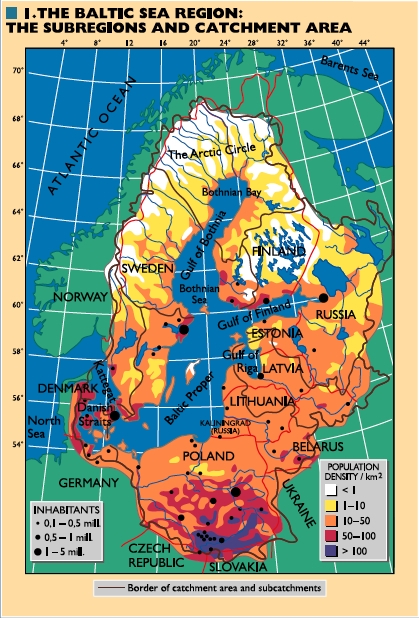
The North European Baltic Sea, an enclosed ocean basin is connected to the North Sea by a shallow opening. The shallow depth, low salinity, and slow rate of water turnover due to limited water exchange with the North Sea makes the Baltic Sea particularly susceptible to increases in nutrient concentrations. An increase in anthropogenic nutrient load from the runoff of agricultural waste, industry, and municipal sewage, as well as atmospheric depositions such as fossil fuels, has increased algal production and hence sedimentation of organic matter. This has changed the Baltic Sea from a oligotrophic low nutrient clear-water sea into a eutrophic higher nutrient, murky sea. Characteristics of this new regime shift includes increased sedimentation and turbidity, and reduced transparency in water with increased algal mats. Eutrophication has changed the functioning of the Baltic Sea ecosystem, decreased the provisioning fisheries services and consequently human use of the ecosystem services.
Type of regime shift
Ecosystem type
- Marine & coastal
Land uses
- Fisheries
Spatial scale of the case study
- Sub-continental/regional (e.g. southern Africa, Amazon basin)
Continent or Ocean
- Europe
Region
- Northern Europe
Countries
- Lithuania
- Poland
- Russia
- Sweden
- Denmark
- Estonia
- Finland
- Germany
- Latvia
Locate with Google Map
Drivers
Key direct drivers
- External inputs (eg fertilizers)
Land use
- Urban
- Small-scale subsistence crop cultivation
- Large-scale commercial crop cultivation
- Intensive livestock production (eg feedlots)
- Extensive livestock production (rangelands)
- Fisheries
Impacts
Key Ecosystem Processes
- Primary production
- Nutrient cycling
Biodiversity
- Biodiversity
Provisioning services
- Fisheries
Regulating services
- Water purification
Cultural services
- Recreation
- Aesthetic values
Human Well-being
- Food and nutrition
- Health (eg toxins, disease)
- Livelihoods and economic activity
- Cultural, aesthetic and recreational values
Key Attributes
Spatial scale of RS
- Sub-continental/regional
Time scale of RS
- Decades
- Centuries
Reversibility
- Irreversible (on 100 year time scale)
Evidence
- Models
- Contemporary observations
- Experiments
- Other
Confidence: Existence of RS
- Well established – Wide agreement in the literature that the RS exists
Confidence: Mechanism underlying RS
- Well established – Wide agreement on the underlying mechanism
Alternate regimes
The oligotrophic Baltic Sea ( - 1950s)
Before excessive nutrient input, the Baltic Sea was predominantly oligotrophic, clear-water sea with submerged vegetation and commercially preferred fish species, e.g. Baltic cod. The deep waters were oxygenated with generally large volumes of inflow water.
The complex postglacial history of the Baltic Sea caused variations in the scale of the hypoxia. Seafloor sediment studies have shown that the stagnation, anoxia and hydrogen sulphide production are natural phenomena to a certain extent: they took place during the periods when there was a long duration between pulses of oxygen rich saline water from the North Sea, but the areal extent was smaller than today.
The Baltic Sea food web models suggest that the fourth trophic level top predators (mammals, large fish, marine birds) controlled the abundance of small fish, and that herbivorous invertebrates controlled the abundance of primary producers.
The eutrophic Baltic Sea (circa 1950s – present)
The eutrophic Baltic Sea is characterized by increased sedimentation, increased turbidity, reduced transparency in water and increased algal mats. Anoxic areas have spread and a food web regime shift from a cod-dominated to sprat-dominated regime has occurred. It is uncertain how much eutrophication affects the food web other than primary production and local changes caused by the dead zones.
Increased nutrient levels have led to altered nitrogen and phosphorus ratios, increased sedimentation rates and increased input of organic matter to the benthic system. This has in turn led to increased pelagic and benthic primary production, increased turbidity and reduced transparency in the water. Algal blooms can become very large and dense. Reduced oxygen reserves caused by the decomposition of organic matter together with increased occurrences of benthic sulphur bacteria cause dead zones.
Drivers and causes of the regime shift
Increased anthropogenic nutrient load has been a major driving force behind the oxygen deficiency as it has increased algal production and hence sedimentation of organic matter. Extensive draining of wetlands and lakes has increased the proportion of nutrients that are transported to the Baltic Sea, and the speed with which water (and nutrients) run off the landscape into the Baltic.
The limited water exchange with the North Sea and the long residence time of water are the main reasons for the sensitivity of the Baltic Sea to eutrophication. Inflowing dense saline water replaces the old stagnant water in the deeps below the halocline. The displaced stagnant nutrient rich water is brought into the productive surface layer via upwelling (natural internal loading). Phosphorus loading accelerates eutrophication. Vertical stratification of water masses increases the vulnerability of the Baltic Sea to the eutrophication as it hinders or prevents ventilation and oxygenation of the bottom waters and sediments. Only a few Major Baltic Inflows (MBI), large volume inflows of high-salinity water, have been recognized since the mid-1970s. The lack of major inflows is believed to have resulted in a long-term stagnation. North Sea saltwater inflows are irregular and unpredictable. They are governed by large-scale and local meteorological variations and by sea level and salinity distributions.
How the regime shift worked
Increased nutrient loading have changed the Baltic Sea from an oligotrophic low nutrient clear-water sea into a eutrophic higher nutrient, murky sea. The shallow depth, low salinity, and slow rate of water turnover due to limited water exchange with the North Sea make the Baltic Sea particularly susceptible to increases in nutrient concentrations leading to eutrophication, because nutrients discharged to the sea will remain in the basin for a long time. The Baltic Sea has large variances and gradients in topography, geology, hydrography and climate. Hence, the consequences of the eutrophication are different in different parts of the sea.
Excessive nutrients promote the growth of photosynthetic plants and algae. Abundant phytoplankton species generate excess photosynthetic production, which the Baltic Sea ecosystem is unable to process. Algal mats sink down to the seafloor and decompose, depleting the oxygen in the near bottom water layer. When the organic biomass decomposing conditions become anoxic, the decomposing bacteria acting on these conditions start to produce hydrogen sulphide, which is extremely toxic. Gradually the living conditions become intolerable for fish and the benthic fauna. Fish move away and benthic fauna dies in masses, resulting in large areas of dead zones in the sea floor. The increase in phytoplankton leads to greater turbidity and thus decreased light penetration, which limits the habitat available for macrophytes.
Salinity in the Baltic Sea is low with extreme vertical and horizontal gradients and a permanent halocline at about 50-70m in the Baltic proper. The permanent halocline decreases vertical mixing of the water column, causing the deep areas of the Baltic Proper below the halocline to often run out of oxygen. Inflows of saline water replenish the deep-water layers of the Baltic Sea with saline and well-oxygenated North Sea water. The occurrence of major inflows is driven by major storms in the North Sea pushing water into the Baltic Sea and is therefore irregular and unpredictable. Salinity levels determine species distribution in the several large, ecologically distinct sub-basins of The Baltic Sea. Eutrophication has affected the structure of the food web as top-down control has decreased. Deepwater anoxia in the spawning areas has reduced the cod stock.
Impacts on ecosystem services and human well-being
Decrease in provisioning fisheries services can be seen in the declines of cod stock and in the cases of contaminated sea food. Cod has high commercial value for humans. Decline of cod has also in part caused a food web change from a cod-dominated to sprat-dominated regime (see case study: Pelagic food web, the Central Baltic Sea). Bladderwrack, which supports diverse faunal communities and is an important nursery environment for fish and many invertebrates, has suffered from the lack of light and declined. Regulative ecosystem services have been lost in water purification as the primary production has become too abundant for the Baltic Sea ecosystem to be able to process. Increase in phytoplankton leads to greater turbidity and thus decreased light penetration, which limits the habitat available for macrophytes. Anoxic areas and hydrogen sulphide production have increased due to decomposing biomass, resulting in large areas of dead zones in the sea floor.
Cultural services for water use and creation have been lost. Algal blooms have led to closed beaches, frequent public concerns, large cleanup costs, human health problems, lowered values of coastal properties, and loss of revenue from tourism and recreation.
Management options
In 1974 some Baltic Sea countries began to acknowledge that eutrophication was an anthropogenic problem. Since the 1970s, the Helsinki Commission (HELCOM) has provided several recommendations for nutrient reductions. In the 1980s further attention was drawn to the load of nutrients entering the Baltic Sea and HELCOM started to work towards a 50% reduction target. In 1988 the ministers of the environment in the Baltic Sea countries signed a declaration stating that contracting parties were to reduce their emissions.
During the last few decades some of the Baltic Sea countries have managed to slow the increase of their nitrogen inputs and even reduce the inputs of phosphorus. During 1990-2000, the direct point-source inputs of phosphorus and nitrogen decreased by 68% and 60%. From 1990-2006 the total inputs to the Baltic Sea were reduced by 45% for phosphorus and 30% for nitrogen. Atmospheric nitrogen decreased since the mid-1990s and increased during 2003-2007. In 2005, the HELCOM launched the Baltic Sea Action Plan Plan. It is a cross-sectional, international program aiming to restore good ecological status of the Baltic marine environment by 2021. All major stakeholders are included and the measures can be taken at regional, national, European and global level.
Key References
-
Folke C, Hammer M, Jansson Ann-Mari. 1991. Life-support value of ecosystems: a case study of the Baltic Sea region. Ecological Economics 3, 123-137.
-
Helsinki Commission, 2009. HELCOM Baltic Sea Action Plan. (Online) http://www.helcom.fi/BSAP/en_GB/intro/ (Last update 2.11.2009)(Last accessed 11.8.2011.)
-
Helsinki Commission. 2006. Eutrophication in the Baltic Sea. Draft HELCOM Thematic Assessment in 2006. http://helcom.navigo.fi/stc/files/BSAP/FINAL Eutrophication.pdf (Last accessed 11.8.2011)
-
Rönnberg C, Bonsdorff E. 2004. Baltic Sea eutrophication: area-specific ecological consequences. Hydrobiologia 514, 227-241.
-
Vahtera E, Conley DJ, Gustafsson BG, Kuosa H, Pitkänen H, Savchuk OP, Tamminen T, Viitasalo M, Voss M, Wasmund N, Wulff F. 2007. Internal ecosystem feedbacks enhance nitrogen-fixing cyanobacteria blooms and complicate management in the Baltic Sea. Ambio 36: 180-188.
-
Voss M, Dippner JW, Humborg C, Hürdler J, Korth F, Neumann T, Schernewski G, Venohr M. 2011. History and scenarios of future development of Baltic Sea eutrophication. Estuarine, Coastal and Shelf Science 92, 307-322.
-
Wulff F, Savchuk OP, Sokolov A, Humborg C, Mörth CM. 2007. Management options and effects on a marine ecosystem - Assessing the future of the Baltic. Ambio 36, 2/3.
Citation
Baltic Sea - pelagic food web
Baltic Sea - pelagic food web
Main Contributors:
Other Contributors:




Summary
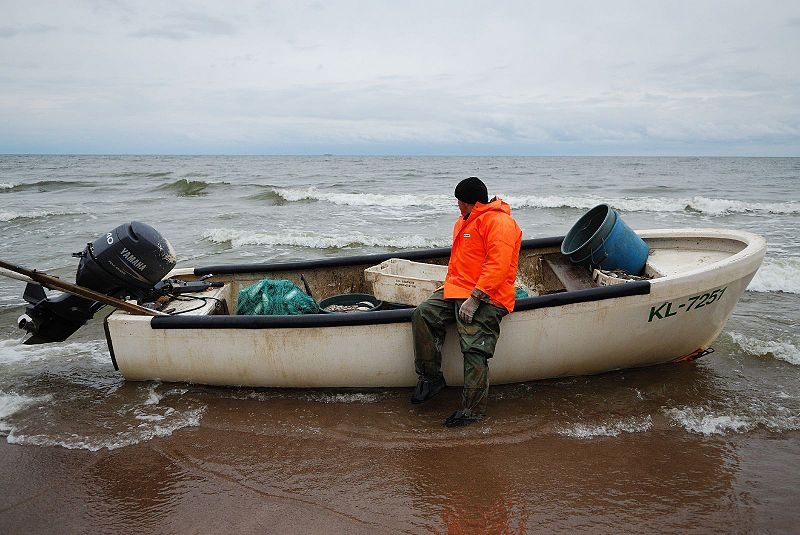
The Baltic Sea is a semi-enclosed, brackish sea located in Northern Europe. The regime shift described for the Central Baltic Sea involves a drastic change from a cod- to a sprat-dominated ecosystem in a marine food web. Through the biomass decrease of a high trophic level, a commercially high valued and favored table fish was replaced by a low trophic level and low commercial value fish. The prerequisite for the change in the system was most probably loss of resilience, which was caused by poor cod recruitment conditions and too high fishing pressure. Anthropogenic eutrophication and infrequent inflows of saline water from the North Sea contributed to the changed deep water conditions in the Central Baltic, resulting in anoxia and low salinity lowering the cod reproduction rates. Since cod (Gadus morhua) is the main predator of sprat (Sprattus sprattus), the cod decrease caused a trophic cascade as the sprat stock dramatically increased.
Type of regime shift
- Unknown
Ecosystem type
- Marine & coastal
Land uses
- Fisheries
Spatial scale of the case study
- Sub-continental/regional (e.g. southern Africa, Amazon basin)
Continent or Ocean
- Europe
Region
- Northern Europe
Countries
- Lithuania
- Poland
- Russia
- Sweden
- Denmark
- Estonia
- Finland
- Germany
- Latvia
Locate with Google Map
Drivers
Key direct drivers
- External inputs (eg fertilizers)
Land use
- Urban
- Small-scale subsistence crop cultivation
- Large-scale commercial crop cultivation
- Intensive livestock production (eg feedlots)
- Extensive livestock production (rangelands)
- Fisheries
Impacts
Key Ecosystem Processes
- Primary production
- Nutrient cycling
Biodiversity
- Biodiversity
Provisioning services
- Fisheries
Regulating services
- Water purification
Cultural services
- Recreation
- Aesthetic values
Human Well-being
- Food and nutrition
- Health (eg toxins, disease)
- Livelihoods and economic activity
- Cultural, aesthetic and recreational values
Key Attributes
Spatial scale of RS
- Sub-continental/regional
Time scale of RS
- Decades
- Centuries
Reversibility
- Irreversible (on 100 year time scale)
Evidence
- Models
- Contemporary observations
- Experiments
- Other
Confidence: Existence of RS
- Well established – Wide agreement in the literature that the RS exists
Confidence: Mechanism underlying RS
- Well established – Wide agreement on the underlying mechanism
Alternate regimes
The oligotrophic Baltic Sea ( - 1950s)
Before excessive nutrient input, the Baltic Sea was predominantly oligotrophic, clear-water sea with submerged vegetation and commercially preferred fish species, e.g. Baltic cod. The deep waters were oxygenated with generally large volumes of inflow water.
The complex postglacial history of the Baltic Sea caused variations in the scale of the hypoxia. Seafloor sediment studies have shown that the stagnation, anoxia and hydrogen sulphide production are natural phenomena to a certain extent: they took place during the periods when there was a long duration between pulses of oxygen rich saline water from the North Sea, but the areal extent was smaller than today.
The Baltic Sea food web models suggest that the fourth trophic level top predators (mammals, large fish, marine birds) controlled the abundance of small fish, and that herbivorous invertebrates controlled the abundance of primary producers.
The eutrophic Baltic Sea (circa 1950s – present)
The eutrophic Baltic Sea is characterized by increased sedimentation, increased turbidity, reduced transparency in water and increased algal mats. Anoxic areas have spread and a food web regime shift from a cod-dominated to sprat-dominated regime has occurred. It is uncertain how much eutrophication affects the food web other than primary production and local changes caused by the dead zones.
Increased nutrient levels have led to altered nitrogen and phosphorus ratios, increased sedimentation rates and increased input of organic matter to the benthic system. This has in turn led to increased pelagic and benthic primary production, increased turbidity and reduced transparency in the water. Algal blooms can become very large and dense. Reduced oxygen reserves caused by the decomposition of organic matter together with increased occurrences of benthic sulphur bacteria cause dead zones.
Drivers and causes of the regime shift
Increased anthropogenic nutrient load has been a major driving force behind the oxygen deficiency as it has increased algal production and hence sedimentation of organic matter. Extensive draining of wetlands and lakes has increased the proportion of nutrients that are transported to the Baltic Sea, and the speed with which water (and nutrients) run off the landscape into the Baltic.
The limited water exchange with the North Sea and the long residence time of water are the main reasons for the sensitivity of the Baltic Sea to eutrophication. Inflowing dense saline water replaces the old stagnant water in the deeps below the halocline. The displaced stagnant nutrient rich water is brought into the productive surface layer via upwelling (natural internal loading). Phosphorus loading accelerates eutrophication. Vertical stratification of water masses increases the vulnerability of the Baltic Sea to the eutrophication as it hinders or prevents ventilation and oxygenation of the bottom waters and sediments. Only a few Major Baltic Inflows (MBI), large volume inflows of high-salinity water, have been recognized since the mid-1970s. The lack of major inflows is believed to have resulted in a long-term stagnation. North Sea saltwater inflows are irregular and unpredictable. They are governed by large-scale and local meteorological variations and by sea level and salinity distributions.
How the regime shift worked
Increased nutrient loading have changed the Baltic Sea from an oligotrophic low nutrient clear-water sea into a eutrophic higher nutrient, murky sea. The shallow depth, low salinity, and slow rate of water turnover due to limited water exchange with the North Sea make the Baltic Sea particularly susceptible to increases in nutrient concentrations leading to eutrophication, because nutrients discharged to the sea will remain in the basin for a long time. The Baltic Sea has large variances and gradients in topography, geology, hydrography and climate. Hence, the consequences of the eutrophication are different in different parts of the sea.
Excessive nutrients promote the growth of photosynthetic plants and algae. Abundant phytoplankton species generate excess photosynthetic production, which the Baltic Sea ecosystem is unable to process. Algal mats sink down to the seafloor and decompose, depleting the oxygen in the near bottom water layer. When the organic biomass decomposing conditions become anoxic, the decomposing bacteria acting on these conditions start to produce hydrogen sulphide, which is extremely toxic. Gradually the living conditions become intolerable for fish and the benthic fauna. Fish move away and benthic fauna dies in masses, resulting in large areas of dead zones in the sea floor. The increase in phytoplankton leads to greater turbidity and thus decreased light penetration, which limits the habitat available for macrophytes.
Salinity in the Baltic Sea is low with extreme vertical and horizontal gradients and a permanent halocline at about 50-70m in the Baltic proper. The permanent halocline decreases vertical mixing of the water column, causing the deep areas of the Baltic Proper below the halocline to often run out of oxygen. Inflows of saline water replenish the deep-water layers of the Baltic Sea with saline and well-oxygenated North Sea water. The occurrence of major inflows is driven by major storms in the North Sea pushing water into the Baltic Sea and is therefore irregular and unpredictable. Salinity levels determine species distribution in the several large, ecologically distinct sub-basins of The Baltic Sea. Eutrophication has affected the structure of the food web as top-down control has decreased. Deepwater anoxia in the spawning areas has reduced the cod stock.
Impacts on ecosystem services and human well-being
Decrease in provisioning fisheries services can be seen in the declines of cod stock and in the cases of contaminated sea food. Cod has high commercial value for humans. Decline of cod has also in part caused a food web change from a cod-dominated to sprat-dominated regime (see case study: Pelagic food web, the Central Baltic Sea). Bladderwrack, which supports diverse faunal communities and is an important nursery environment for fish and many invertebrates, has suffered from the lack of light and declined. Regulative ecosystem services have been lost in water purification as the primary production has become too abundant for the Baltic Sea ecosystem to be able to process. Increase in phytoplankton leads to greater turbidity and thus decreased light penetration, which limits the habitat available for macrophytes. Anoxic areas and hydrogen sulphide production have increased due to decomposing biomass, resulting in large areas of dead zones in the sea floor.
Cultural services for water use and creation have been lost. Algal blooms have led to closed beaches, frequent public concerns, large cleanup costs, human health problems, lowered values of coastal properties, and loss of revenue from tourism and recreation.
Management options
In 1974 some Baltic Sea countries began to acknowledge that eutrophication was an anthropogenic problem. Since the 1970s, the Helsinki Commission (HELCOM) has provided several recommendations for nutrient reductions. In the 1980s further attention was drawn to the load of nutrients entering the Baltic Sea and HELCOM started to work towards a 50% reduction target. In 1988 the ministers of the environment in the Baltic Sea countries signed a declaration stating that contracting parties were to reduce their emissions.
During the last few decades some of the Baltic Sea countries have managed to slow the increase of their nitrogen inputs and even reduce the inputs of phosphorus. During 1990-2000, the direct point-source inputs of phosphorus and nitrogen decreased by 68% and 60%. From 1990-2006 the total inputs to the Baltic Sea were reduced by 45% for phosphorus and 30% for nitrogen. Atmospheric nitrogen decreased since the mid-1990s and increased during 2003-2007. In 2005, the HELCOM launched the Baltic Sea Action Plan Plan. It is a cross-sectional, international program aiming to restore good ecological status of the Baltic marine environment by 2021. All major stakeholders are included and the measures can be taken at regional, national, European and global level.
Alternate regimes
The oligotrophic Baltic Sea ( - 1950s)
Before excessive nutrient input, the Baltic Sea was predominantly oligotrophic, clear-water sea with submerged vegetation and commercially preferred fish species, e.g. Baltic cod. The deep waters were oxygenated with generally large volumes of inflow water.
The complex postglacial history of the Baltic Sea caused variations in the scale of the hypoxia. Seafloor sediment studies have shown that the stagnation, anoxia and hydrogen sulphide production are natural phenomena to a certain extent: they took place during the periods when there was a long duration between pulses of oxygen rich saline water from the North Sea, but the areal extent was smaller than today.
The Baltic Sea food web models suggest that the fourth trophic level top predators (mammals, large fish, marine birds) controlled the abundance of small fish, and that herbivorous invertebrates controlled the abundance of primary producers.
The eutrophic Baltic Sea (circa 1950s – present)
The eutrophic Baltic Sea is characterized by increased sedimentation, increased turbidity, reduced transparency in water and increased algal mats. Anoxic areas have spread and a food web regime shift from a cod-dominated to sprat-dominated regime has occurred. It is uncertain how much eutrophication affects the food web other than primary production and local changes caused by the dead zones.
Increased nutrient levels have led to altered nitrogen and phosphorus ratios, increased sedimentation rates and increased input of organic matter to the benthic system. This has in turn led to increased pelagic and benthic primary production, increased turbidity and reduced transparency in the water. Algal blooms can become very large and dense. Reduced oxygen reserves caused by the decomposition of organic matter together with increased occurrences of benthic sulphur bacteria cause dead zones.
Drivers and causes of the regime shift
Increased anthropogenic nutrient load has been a major driving force behind the oxygen deficiency as it has increased algal production and hence sedimentation of organic matter. Extensive draining of wetlands and lakes has increased the proportion of nutrients that are transported to the Baltic Sea, and the speed with which water (and nutrients) run off the landscape into the Baltic.
The limited water exchange with the North Sea and the long residence time of water are the main reasons for the sensitivity of the Baltic Sea to eutrophication. Inflowing dense saline water replaces the old stagnant water in the deeps below the halocline. The displaced stagnant nutrient rich water is brought into the productive surface layer via upwelling (natural internal loading). Phosphorus loading accelerates eutrophication. Vertical stratification of water masses increases the vulnerability of the Baltic Sea to the eutrophication as it hinders or prevents ventilation and oxygenation of the bottom waters and sediments. Only a few Major Baltic Inflows (MBI), large volume inflows of high-salinity water, have been recognized since the mid-1970s. The lack of major inflows is believed to have resulted in a long-term stagnation. North Sea saltwater inflows are irregular and unpredictable. They are governed by large-scale and local meteorological variations and by sea level and salinity distributions.
How the regime shift worked
Increased nutrient loading have changed the Baltic Sea from an oligotrophic low nutrient clear-water sea into a eutrophic higher nutrient, murky sea. The shallow depth, low salinity, and slow rate of water turnover due to limited water exchange with the North Sea make the Baltic Sea particularly susceptible to increases in nutrient concentrations leading to eutrophication, because nutrients discharged to the sea will remain in the basin for a long time. The Baltic Sea has large variances and gradients in topography, geology, hydrography and climate. Hence, the consequences of the eutrophication are different in different parts of the sea.
Excessive nutrients promote the growth of photosynthetic plants and algae. Abundant phytoplankton species generate excess photosynthetic production, which the Baltic Sea ecosystem is unable to process. Algal mats sink down to the seafloor and decompose, depleting the oxygen in the near bottom water layer. When the organic biomass decomposing conditions become anoxic, the decomposing bacteria acting on these conditions start to produce hydrogen sulphide, which is extremely toxic. Gradually the living conditions become intolerable for fish and the benthic fauna. Fish move away and benthic fauna dies in masses, resulting in large areas of dead zones in the sea floor. The increase in phytoplankton leads to greater turbidity and thus decreased light penetration, which limits the habitat available for macrophytes.
Salinity in the Baltic Sea is low with extreme vertical and horizontal gradients and a permanent halocline at about 50-70m in the Baltic proper. The permanent halocline decreases vertical mixing of the water column, causing the deep areas of the Baltic Proper below the halocline to often run out of oxygen. Inflows of saline water replenish the deep-water layers of the Baltic Sea with saline and well-oxygenated North Sea water. The occurrence of major inflows is driven by major storms in the North Sea pushing water into the Baltic Sea and is therefore irregular and unpredictable. Salinity levels determine species distribution in the several large, ecologically distinct sub-basins of The Baltic Sea. Eutrophication has affected the structure of the food web as top-down control has decreased. Deepwater anoxia in the spawning areas has reduced the cod stock.
Impacts on ecosystem services and human well-being
Decrease in provisioning fisheries services can be seen in the declines of cod stock and in the cases of contaminated sea food. Cod has high commercial value for humans. Decline of cod has also in part caused a food web change from a cod-dominated to sprat-dominated regime (see case study: Pelagic food web, the Central Baltic Sea). Bladderwrack, which supports diverse faunal communities and is an important nursery environment for fish and many invertebrates, has suffered from the lack of light and declined. Regulative ecosystem services have been lost in water purification as the primary production has become too abundant for the Baltic Sea ecosystem to be able to process. Increase in phytoplankton leads to greater turbidity and thus decreased light penetration, which limits the habitat available for macrophytes. Anoxic areas and hydrogen sulphide production have increased due to decomposing biomass, resulting in large areas of dead zones in the sea floor.
Cultural services for water use and creation have been lost. Algal blooms have led to closed beaches, frequent public concerns, large cleanup costs, human health problems, lowered values of coastal properties, and loss of revenue from tourism and recreation.
Management options
In 1974 some Baltic Sea countries began to acknowledge that eutrophication was an anthropogenic problem. Since the 1970s, the Helsinki Commission (HELCOM) has provided several recommendations for nutrient reductions. In the 1980s further attention was drawn to the load of nutrients entering the Baltic Sea and HELCOM started to work towards a 50% reduction target. In 1988 the ministers of the environment in the Baltic Sea countries signed a declaration stating that contracting parties were to reduce their emissions.
During the last few decades some of the Baltic Sea countries have managed to slow the increase of their nitrogen inputs and even reduce the inputs of phosphorus. During 1990-2000, the direct point-source inputs of phosphorus and nitrogen decreased by 68% and 60%. From 1990-2006 the total inputs to the Baltic Sea were reduced by 45% for phosphorus and 30% for nitrogen. Atmospheric nitrogen decreased since the mid-1990s and increased during 2003-2007. In 2005, the HELCOM launched the Baltic Sea Action Plan Plan. It is a cross-sectional, international program aiming to restore good ecological status of the Baltic marine environment by 2021. All major stakeholders are included and the measures can be taken at regional, national, European and global level.
Key References
-
Alheit J, Möllman C, Dutz J, Kornilovs G, Loewe P, Mohrholz V, Wasmund N. 2005. Synchronous ecological regime shifts in the Central Baltic and the North Sea in the late 1980s. ICES Journal of Marine Sciences 62, 1205-1215.
-
Aps R, Lassen H. 2010. Recovery of depleted Baltic Sea fish stocks: a review. ICES Journal of Marine Science 67, 1856–1860.
-
Cardinale, M, Svedäng H. 2011. The beauty of simplicity in science: Baltic cod stock improves rapidly in a "cod hostile" ecosystem state. Marine Ecology Progress Series 425, 297-301.
-
Casini M, Hjelm J, Molinero JC, Lovgren J et al. 2009. Trophic cascades promote threshold-like shifts in pelagic marine ecosystems. Proc Natl Acad Sci USA 106, 197–202.
-
Casini M, Lovgren J, Hjelm J, Cardinale M, Molinero JC, Kornilovs G. 2008. Multi-level Trophic Cascades in a Heavily Expoited Open Marine Ecosystem. Proc R Soc B Biol Sci 275, 1793-1801
-
Döring R, Egelkraut TM. 2007. Investing in natural capital as management strategy in fisheries: the case of the Baltic Sea cod fishery. Ecological Economics 64, 634-642.
-
Hanninen J, Vourinen I, Hjelt P. 2000. Climatic factors in the Atlantic control of the oceanographic and ecological changes in the Baltic Sea. Limnology and Oceanography 45, 703-710.
-
Heikinheimo, O. 2011. Interactions Between Cod, Herring and Sprat in The Changing Environment of The Baltic Sea: A Dynamic Model Analysis. Ecological Modeling 222, 1731 – 1742.
-
Lindegren M, Diekmann R, Möllmann C. 2010. Regime Shifts, resilience and recovery of a cod stock. Marine Ecology Progress Series 402, 249 – 253.
-
Möllmann C, Diekmann R, Müller-Karulis B, Kornilovs G, Plikshs M, Axe P. 2009. Reorganization of a large marine ecosystem due to atmospheric and anthropogenic pressure: a discontinuous regime shift in the Central Baltic Sea. Glob Change Biol 15, 1377–1393.
-
Möllmann C, Müller-Karulis B, Kornilovs G, St. John MA. 2008. Effects of climate and overfishing on zooplankton dynamics and ecosystem structure: regime shifts, trophic cascade, and feedback loops in a simple ecosystem. ICES J Mar Sci 65, 302–310.
-
Österblom H, Gårdmark A, Bergström L, Müller-Karulis B et al. 2010. Making the ecosystem approach operational: can regime shifts in ecological and governance systems facilitate the transition? Mar Pol 34, 1290–1299.
-
Waldo S, Paulrud A, Jonsson A. 2010. A note on the economics of Swedish Baltic Sea fisheries. Marine Policy 34, 716-719.
