Message

Johanna
Hewletts Creek, USA
Hewletts Creek, USA
Main Contributors:
Other Contributors:
Summary
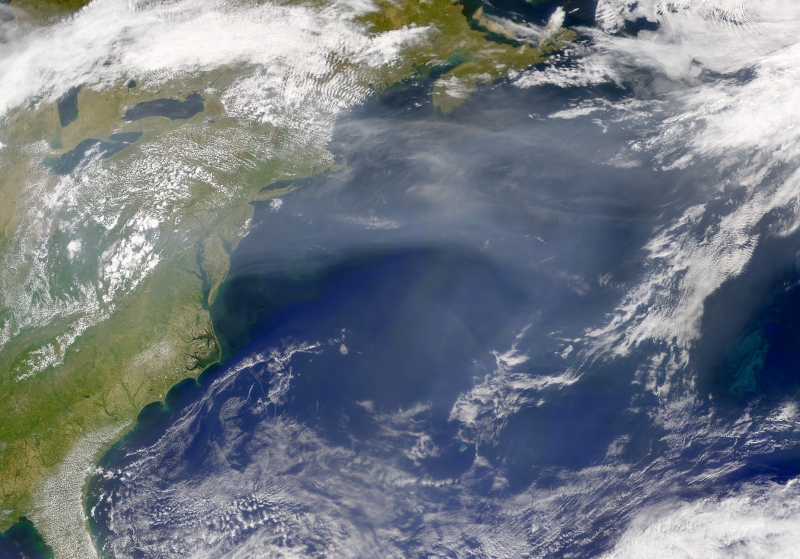
Hewletts Creek experiences episodic hypoxia during the warmmonths. Nutrient loading is high from the heavily developed watershed; portions of the creek receive run-off from golf courses, suburban areas and roadways.
Type of regime shift
Ecosystem type
- Marine & coastal
Land uses
- Fisheries
Spatial scale of the case study
- Local/landscape (e.g. lake, catchment, community)
Continent or Ocean
- North America
Region
- North Carolina
Countries
- United States
Locate with Google Map
Key References
-
MacPherson T, Cahoon L, Mallin M. 2007. Water column oxygen demand and sediment oxygen flux: patterns of oxygen depletion in tidal creeks. Hydrobiologia 586, 235-248.
Citation
Futch Creek, USA
Futch Creek, USA
Main Contributors:
Other Contributors:
Summary
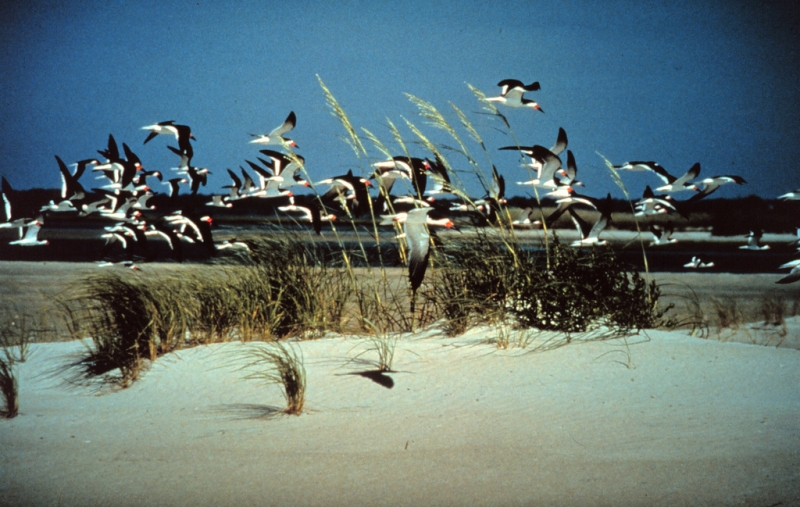
Futch Creek hypoxia was documented in the 2000s. It is caused by agricultural, urban and suburban runoff contributing to nutrient loading.
Type of regime shift
Ecosystem type
- Marine & coastal
Land uses
- Fisheries
Spatial scale of the case study
- Local/landscape (e.g. lake, catchment, community)
Continent or Ocean
- North America
Region
- North Carolina
Countries
- United States
Locate with Google Map
Key References
-
Committee on Environment and Natural Resources. 2010. Scientific Assessment of Hypoxia in U.S. Coastal Waters. Interagency Working Group on Harmful Algal Blooms, Hypoxia, and Human Health of the Joint Subcommittee on Ocean Science and Technology. Washington, DC.
Citation
Cape Fear River, USA
Cape Fear River, USA
Main Contributors:
Other Contributors:
Summary
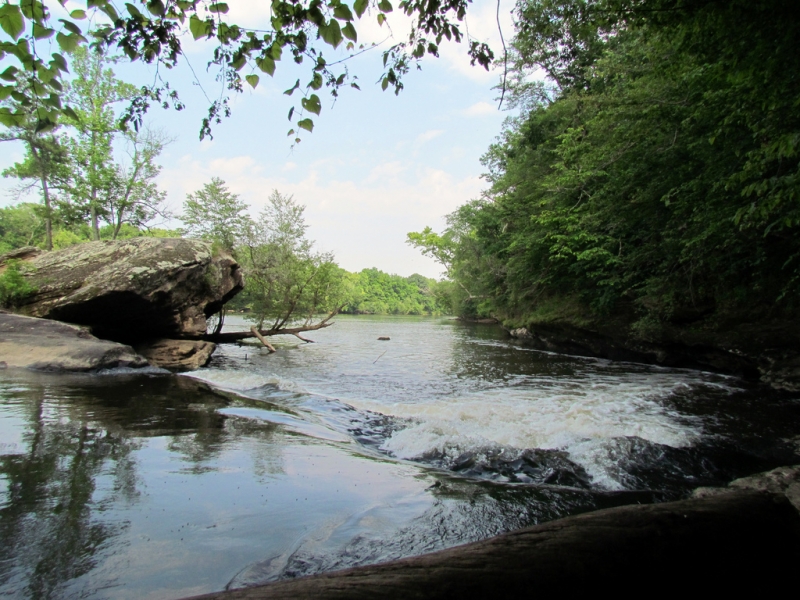
Cape Fear river hypoxia was documented in 1970s. It caused fish kills and reduced benthos. In northeast Cape Fear river, where hypoxia was documented in 1990s, the drivers were agricultural, urban and suburban runoff contributing to nutrient loading and thus indirectly to hypoxia.
Type of regime shift
Ecosystem type
- Freshwater lakes & rivers
Land uses
- Fisheries
Spatial scale of the case study
- Local/landscape (e.g. lake, catchment, community)
Continent or Ocean
- North America
Region
- East coast of North America
Countries
- United States
Locate with Google Map
Key References
-
Committee on Environment and Natural Resources. 2010. Scientific Assessment of Hypoxia in U.S. Coastal Waters. Interagency Working Group on Harmful Algal Blooms, Hypoxia, and Human Health of the Joint Subcommittee on Ocean Science and Technology. Washington, DC.
Citation
New York Bight, USA
New York Bight, USA
Main Contributors:
Other Contributors:
Summary
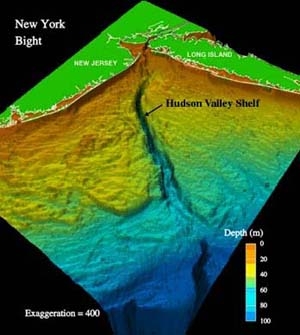
New York Bight faced a hypoxic event in the summer of 1976, when calm weather led to stratification and algae blooms. One of the drivers may have been upwelling of nutrient rich water. Hypoxia caused mass mortality of benthos (with multi-year recovery), loss of habitat for local fauna, and altered or blocked migration routes. The economic cost of the 1976 hypoxia was ca $265 million.
Type of regime shift
Ecosystem type
- Marine & coastal
Land uses
- Fisheries
Spatial scale of the case study
- Local/landscape (e.g. lake, catchment, community)
Continent or Ocean
- North America
Region
- East coast of North America
Countries
- United States
Locate with Google Map
Key References
-
Committee on Environment and Natural Resources. 2010. Scientific Assessment of Hypoxia in U.S. Coastal Waters. Interagency Working Group on Harmful Algal Blooms, Hypoxia, and Human Health of the Joint Subcommittee on Ocean Science and Technology. Washington, DC.
Citation
Shellbank Basin, USA
Shellbank Basin, USA
Main Contributors:
Other Contributors:

Summary
Hypoxia in Shellbank Basin was first documented in 1990s.
Type of regime shift
Ecosystem type
- Marine & coastal
Land uses
- Fisheries
Spatial scale of the case study
- Local/landscape (e.g. lake, catchment, community)
Continent or Ocean
- North America
Region
- East coast of North America
Countries
- United States
Locate with Google Map
Key References
-
Committee on Environment and Natural Resources. 2010. Scientific Assessment of Hypoxia in U.S. Coastal Waters. Interagency Working Group on Harmful Algal Blooms, Hypoxia, and Human Health of the Joint Subcommittee on Ocean Science and Technology. Washington, DC.
Citation
Dorchester Bay, USA
Dorchester Bay, USA
Main Contributors:
Other Contributors:

Summary
Dorchester Bay had poor water quality in the1980s. Nutrient management has since improved the low dissolved oxygen situation.
Type of regime shift
Ecosystem type
- Marine & coastal
Land uses
- Fisheries
Spatial scale of the case study
- Local/landscape (e.g. lake, catchment, community)
Continent or Ocean
- North America
Region
- East coast of North America
Countries
- United States
Locate with Google Map
Key References
-
Committee on Environment and Natural Resources. 2010. Scientific Assessment of Hypoxia in U.S. Coastal Waters. Interagency Working Group on Harmful Algal Blooms, Hypoxia, and Human Health of the Joint Subcommittee on Ocean Science and Technology. Washington, DC.
Citation
Buzzards Bay, USA
Buzzards Bay, USA
Main Contributors:
Other Contributors:

Summary
Buzzard Bay hypoxia is an episodic summer hypoxia. It was first documented in the 1980s.
Type of regime shift
Ecosystem type
- Marine & coastal
Land uses
- Fisheries
- Tourism
Spatial scale of the case study
- Local/landscape (e.g. lake, catchment, community)
Continent or Ocean
- North America
Region
- East coast of North America
Countries
- United States
Locate with Google Map
Key References
-
Committee on Environment and Natural Resources. 2010. Scientific Assessment of Hypoxia in U.S. Coastal Waters. Interagency Working Group on Harmful Algal Blooms, Hypoxia, and Human Health of the Joint Subcommittee on Ocean Science and Technology. Washington, DC.
Citation
Kennebec and Androscoggin Rivers, USA
Kennebec and Androscoggin Rivers, USA
Main Contributors:
Other Contributors:

Summary
Hypoxia first documented in the 1980s.
Type of regime shift
Ecosystem type
- Marine & coastal
Land uses
- Fisheries
Spatial scale of the case study
- Local/landscape (e.g. lake, catchment, community)
Continent or Ocean
- North America
Region
- Northeastern USA
Countries
- United States
Locate with Google Map
Key References
-
Committee on Environment and Natural Resources. 2010. Scientific Assessment of Hypoxia in U.S. Coastal Waters. Interagency Working Group on Harmful Algal Blooms, Hypoxia, and Human Health of the Joint Subcommittee on Ocean Science and Technology. Washington, DC.
Citation
San Joaquin River, USA
San Joaquin River, USA
Main Contributors:
Other Contributors:

Summary
Oxygen depletion in the San Joaquin river was first documented in the 1960s. The first measured hypoxia occurred in 1972. Hypoxia in the San Joaquin river was caused by sewage discharge, nonpoint runoff and primary production. Stratification is weak. Hypoxia blocks salmon migration when dissolved oxygen levels in the river drop below 6mg/l.
Type of regime shift
Ecosystem type
- Freshwater lakes & rivers
Land uses
- Fisheries
Spatial scale of the case study
- Local/landscape (e.g. lake, catchment, community)
Continent or Ocean
- North America
Region
- California
Countries
- United States
Locate with Google Map
Key References
-
Committee on Environment and Natural Resources. 2010. Scientific Assessment of Hypoxia in U.S. Coastal Waters. Interagency Working Group on Harmful Algal Blooms, Hypoxia, and Human Health of the Joint Subcommittee on Ocean Science and Technology. Washington, DC.
Citation
Lake Pontchartrain, USA
Lake Pontchartrain, USA
Main Contributors:
Other Contributors:
Summary
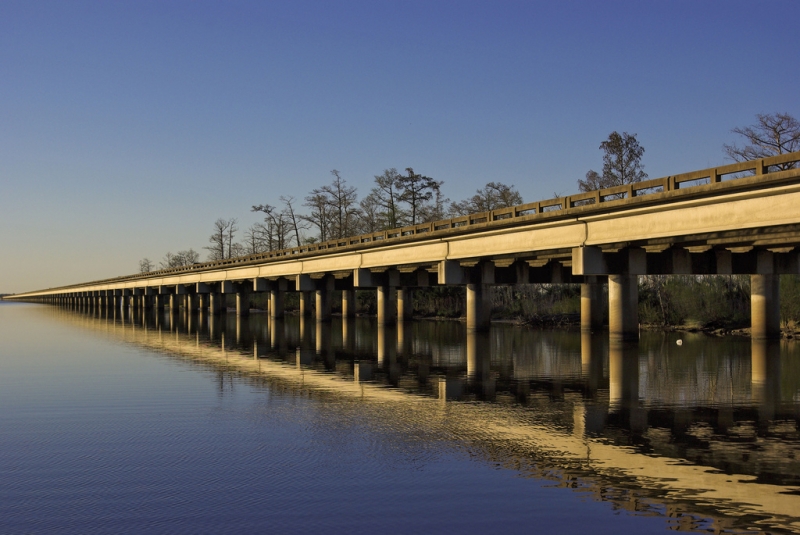
Hypoxia in Lake Pontchartrain was first documented in the 1970s. It was estimated to cover 250km2 (another estimate is 421km2). Hypoxia has caused reduced species diversity and a loss of large clams.
Type of regime shift
Ecosystem type
- Marine & coastal
- Freshwater lakes & rivers
Land uses
- Fisheries
Spatial scale of the case study
- Local/landscape (e.g. lake, catchment, community)
Continent or Ocean
- North America
Region
- Southern USA
Countries
- United States
Locate with Google Map
Key References
-
Committee on Environment and Natural Resources. 2010. Scientific Assessment of Hypoxia in U.S. Coastal Waters. Interagency Working Group on Harmful Algal Blooms, Hypoxia, and Human Health of the Joint Subcommittee on Ocean Science and Technology. Washington, DC.
