
Venice Lagoon, Italy
Main Contributors:
Johanna Yletyinen
Other Contributors:
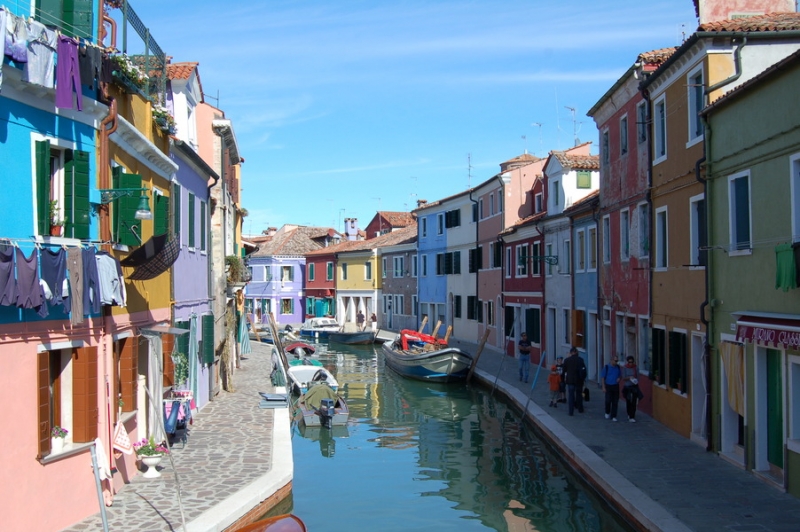
Summary
Organic matter, persistent high temperature and stable weather conditions cause anoxia, which can be entended to the entire water column of the Lagoon of Venice. The lagoon area has been modified by humans for fish farming and for agricultural and industrial purposes (land reclamation).
Type of regime shift
Ecosystem type
- Marine & coastal
- Freshwater lakes & rivers
Land uses
- Fisheries
Spatial scale of the case study
- Local/landscape (e.g. lake, catchment, community)
Continent or Ocean
- Europe
Region
- Mediterranean
Countries
- Italy
Locate with Google Map
Key References
-
Flindt MR, Kamp-Nielsen L, Marques JC, Pardal MA, Bocci M, Bendoricchio G, Salomonsen J, Nielsen SN, Jorgensen SE. 1997.Description of the three shallow estuaries: Mondego River (Portugal), Roskilde Fjord (Denmark) and the Lagoon of Venice (Italy). Ecological Modelling 102, 17-31.
Citation
Johanna Yletyinen.
Venice Lagoon, Italy.
In: Regime Shifts Database, www.regimeshifts.org.
Last revised 2012-01-12 10:16:54 GMT.
