
New York Bight, USA
Main Contributors:
Johanna Yletyinen
Other Contributors:
Summary
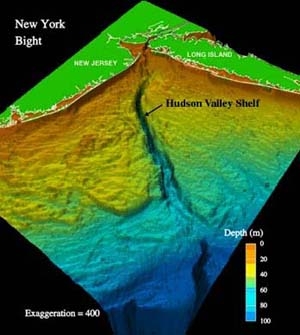
New York Bight faced a hypoxic event in the summer of 1976, when calm weather led to stratification and algae blooms. One of the drivers may have been upwelling of nutrient rich water. Hypoxia caused mass mortality of benthos (with multi-year recovery), loss of habitat for local fauna, and altered or blocked migration routes. The economic cost of the 1976 hypoxia was ca $265 million.
Type of regime shift
Ecosystem type
- Marine & coastal
Land uses
- Fisheries
Spatial scale of the case study
- Local/landscape (e.g. lake, catchment, community)
Continent or Ocean
- North America
Region
- East coast of North America
Countries
- United States
Locate with Google Map
Key References
-
Committee on Environment and Natural Resources. 2010. Scientific Assessment of Hypoxia in U.S. Coastal Waters. Interagency Working Group on Harmful Algal Blooms, Hypoxia, and Human Health of the Joint Subcommittee on Ocean Science and Technology. Washington, DC.
Citation
Johanna Yletyinen.
New York Bight, USA.
In: Regime Shifts Database, www.regimeshifts.org.
Last revised 2011-12-11 16:14:25 GMT.